Shiro Decks
The Knowledge Deck
A book that teaches.
You know your subject. The hard part is a book that teaches it to someone who doesn’t. The Knowledge Deck lays the book out as a path with six cairns, each the answer to a question every reader asks, from “What is it about?” to “What does that mean?”, and gives you the cards to climb from one to the next.
- 29 techniques, 6 idea and template pairs and 7 sparks, for structure, examples and plain explanation
- 6 cairns: the six questions a reader asks, answered on the card
- 18 for the whole book: 6 plans, 6 whys and 6 ascents
$49plus shipping
Coming soon
Tell me when it’s out72 · 29 techniques, 6 idea and template pairs, 7 sparks, 6 cairns, 6 plans, 6 whys and 6 ascents
You Know Too Much to Explain It
Twenty years in a field make you the right person to write the book, and the wrong person to remember what it was like not to know. The first draft skips the step everyone needs, and spends a chapter on the subtlety only you find interesting.
Good non-fiction is built for the reader at the door: what they know already, what they need by page ten, and the one example that makes it click.
Played by the path
How It’s Played
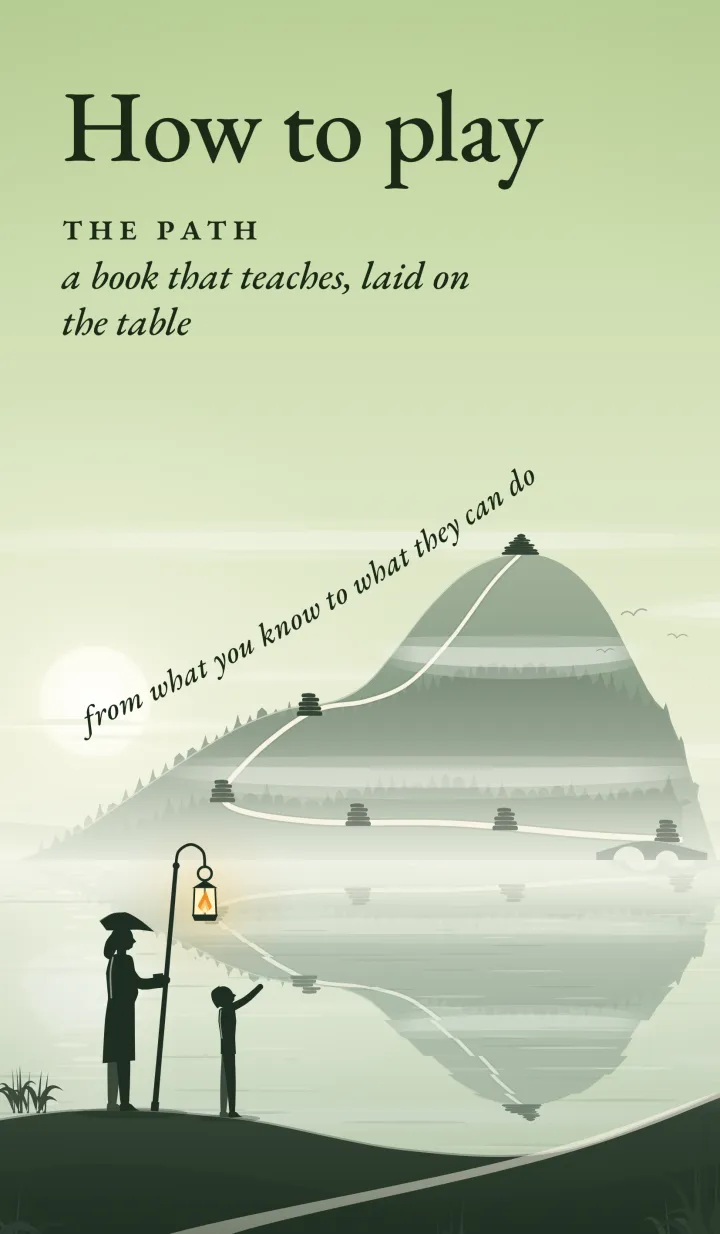
- Choose a plan, then lay the six cairns in a path, from the valley to the summit.
- Fill the steps between them with techniques, examples and sparks.
- Lay a why on any step to test it. If the page can’t answer, go back to its cairn. Then write the path down, as an ascent does.
Six Categories, One Line
One climb on one morning, from the mist in the valley to clear air at the summit. Three categories for what you know and who it is for, two for how the book is built, one for the page.
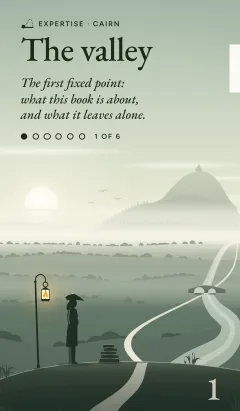 1ExpertiseWhat you know, how deep, and where it connects.
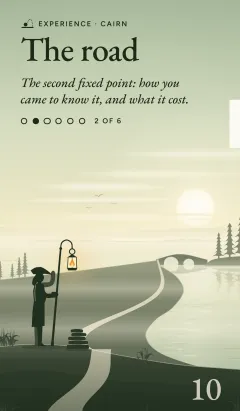 2ExperienceThe mistakes and stories only you can tell.
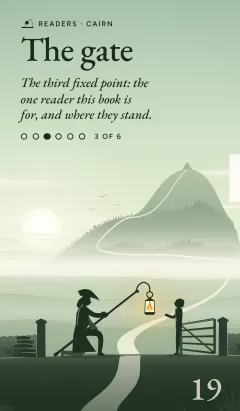 3ReadersWho picks up the book, and what they need by page ten.
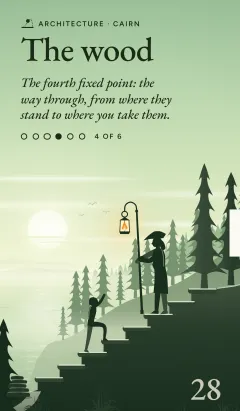 4ArchitectureChapters that build on each other, like steps.
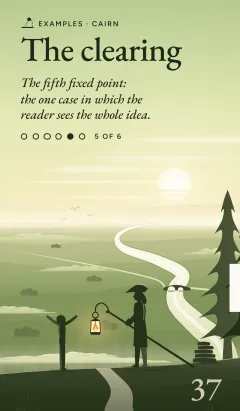 5ExamplesThe people and cases that make an idea land.
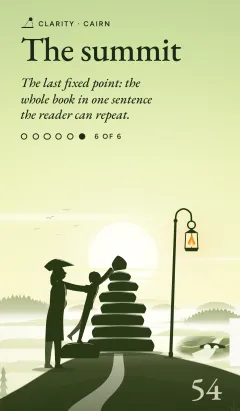 6ClarityExplanations a reader follows the first time.
One Card, Both Sides
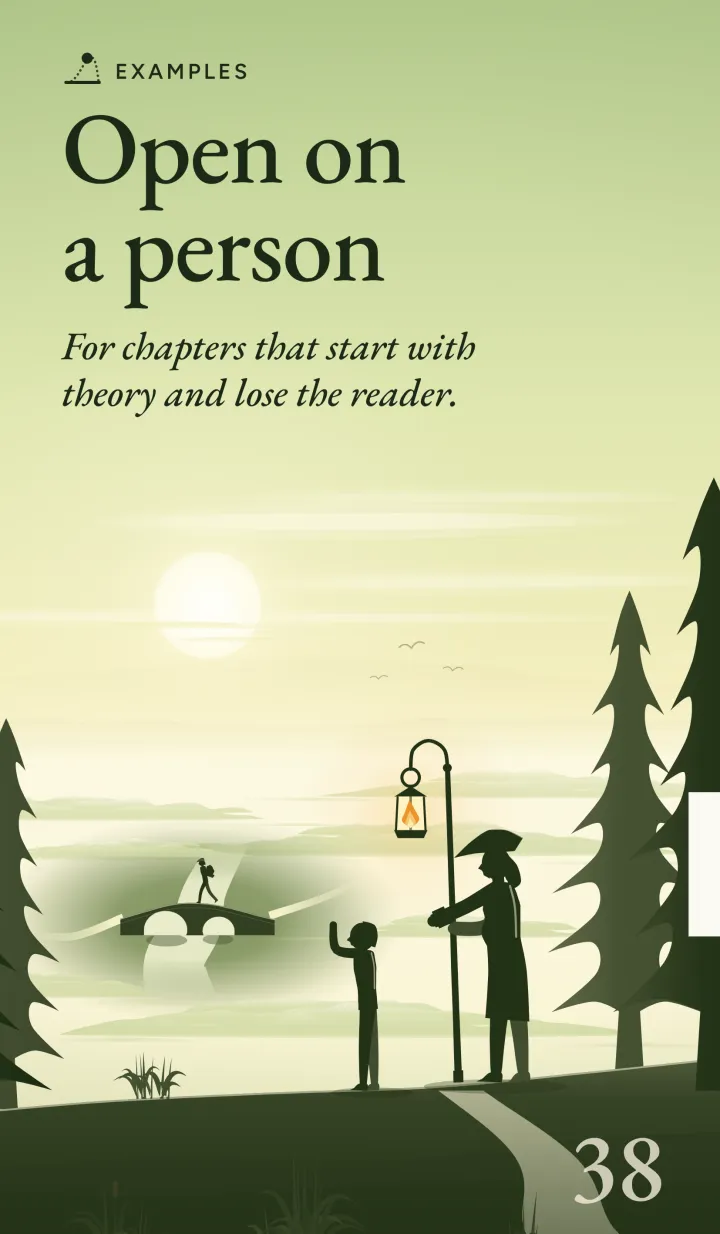
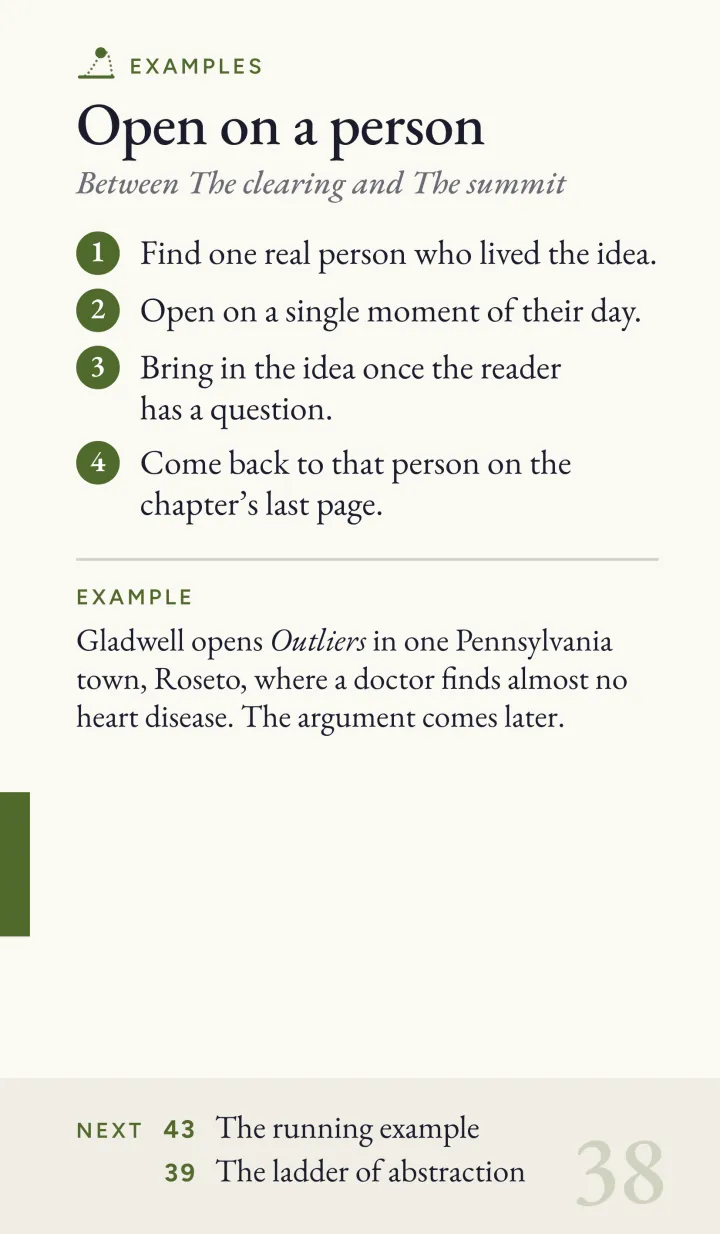
The front names the card and the problem it solves, in the deck’s light. The back is the working side, the one you keep open beside the draft.
- The work
- Steps, questions or lines to fill in: short enough to follow with the draft open.
- An example
- The idea at work in a classic, or in a book, film or series of today.
- Next
- The cards to try before or after, so no card is a dead end.
Open on a person, from Examples.
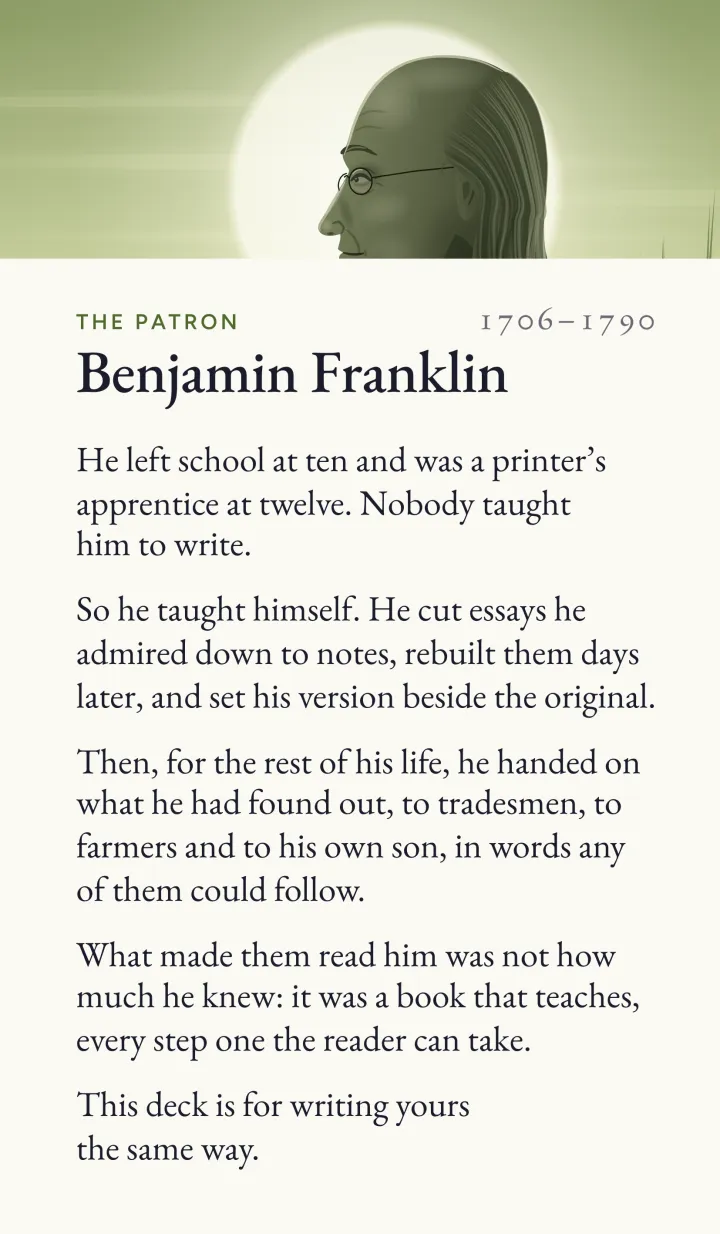
1706–1790
Kept by Franklin
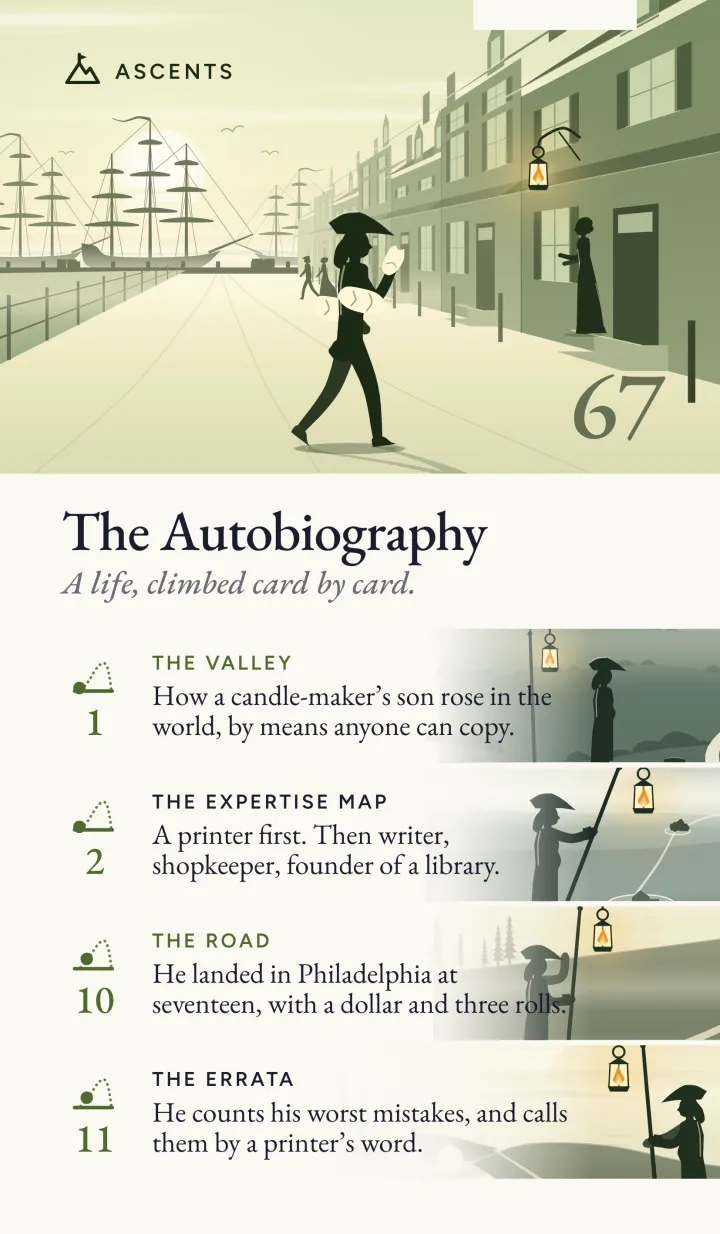
A printer’s apprentice who taught himself to write by taking essays apart and rebuilding them from his notes. Then he gave away what he learned, from Poor Richard’s Almanack to his Autobiography.
He gives the deck its voice: practical, plain, generous with what works. He has a card of his own, on top of the deck.
The courseShare What You Know, with Benjamin Franklin45 minutes
What’s in the Box
- 72 cards: 29 techniques, 6 idea and template pairs, 7 sparks, 6 cairns, 6 plans, 6 whys and 6 ascents
- The patron’s card and the how-to-play card, on top of the 72
- Tarot size, 70 × 120 mm, on heavy matte stock
- A box painted with the deck’s hero, and the heron somewhere in the scene
- The course, Share What You Know, with Benjamin Franklin: 45 minutes of video and a 30-day plan
Why a Deck of Cards
A craft book is read once and shelved. A card sits beside the keyboard, says one thing and asks you to do it now, to this chapter.
Cards also move. You can lay a plot out on the table, deal an interview, spread the flaws beside a page or hand a friend the one about filter words. A book can’t, and a screen shows one thing at a time.
The Questions People Ask
Does it work for memoir?
In part. The Readers and Clarity cards serve any book that tells the truth. A memoir is also a story, though, and the Story and Character decks carry more of that.
When can I get one?
Soon. The Story Deck comes first, then the Character, Knowledge, Style and Revision decks. Press “Tell me when it’s out” on a deck’s page and we’ll write to you once, when it can be ordered. The Practice Deck is out already: it is free in Shiro.
Do I need Shiro to use them?
No. They are paper cards, and they work beside any page, in any app or none. If you write in Shiro, a few meet the app: the Story Deck’s line goes on the Board, and the Character Deck’s interviews go in World.
Is there AI in them?
No. No prompts and no chatbot: every card is written by writers, for writers.
What language are they in?
English or French, one edition each. The French edition is written for French readers, not translated.
What is the course?
Forty-five minutes of video that come with the deck: how the patron worked, then one short lesson for each category, with a technique shown in a classic, in a story of today and on a draft. Then a 30-day plan, one card a day.
Can I get all five?
Yes, once all five exist: the set of five will be $179.