Shiro Decks
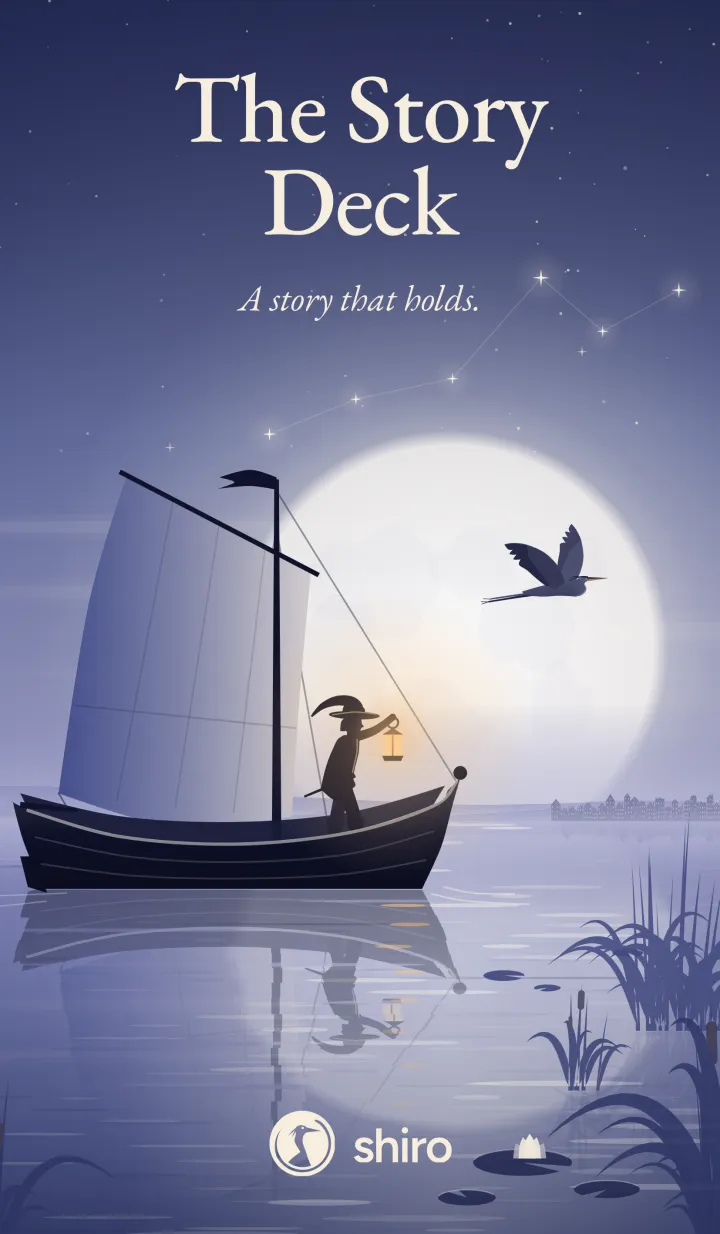
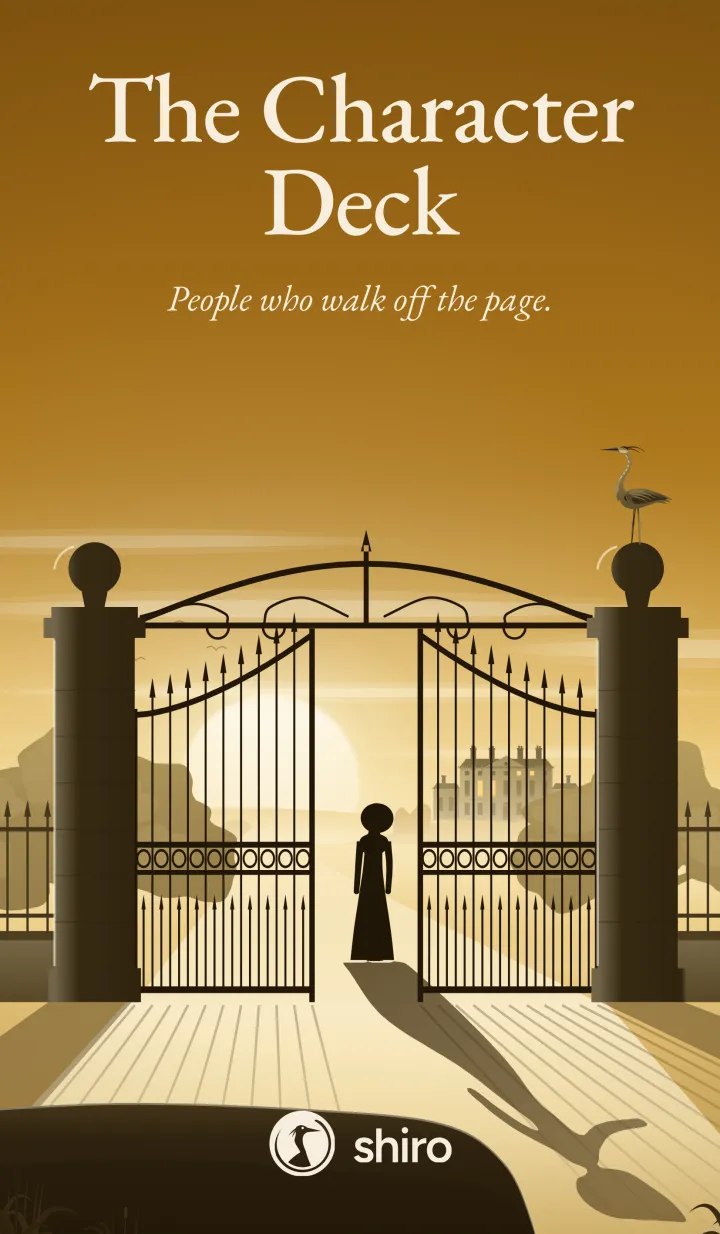
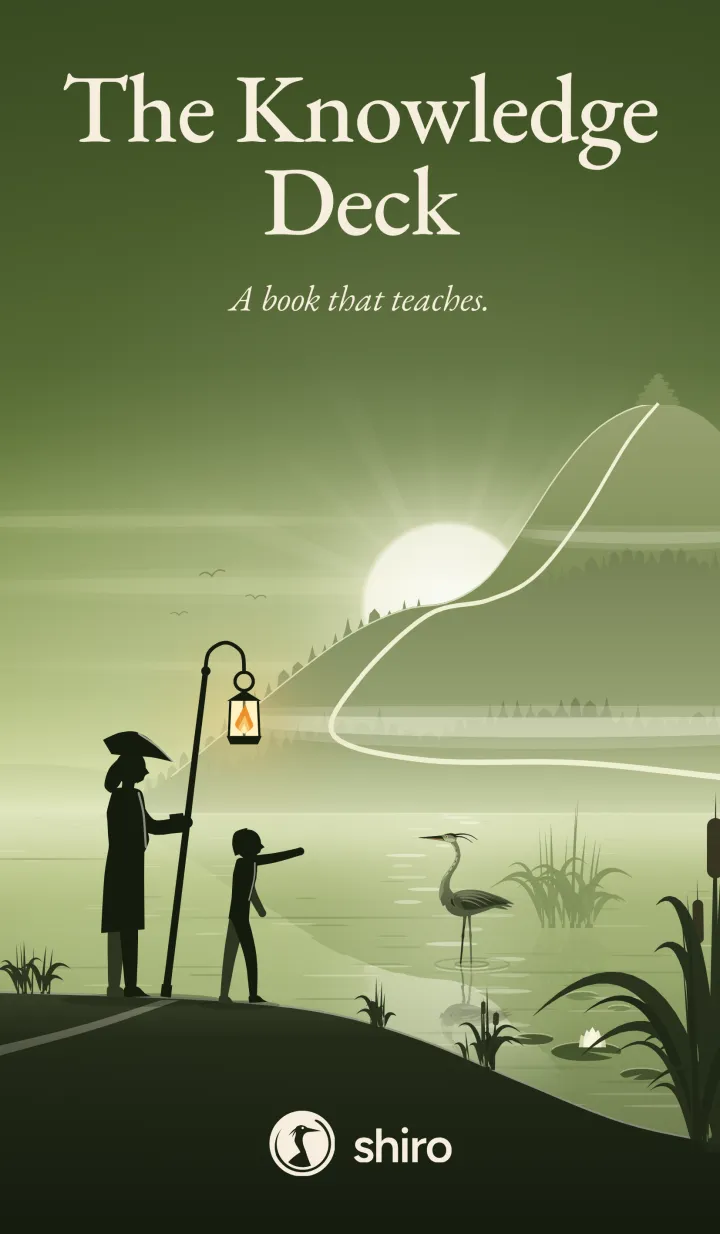
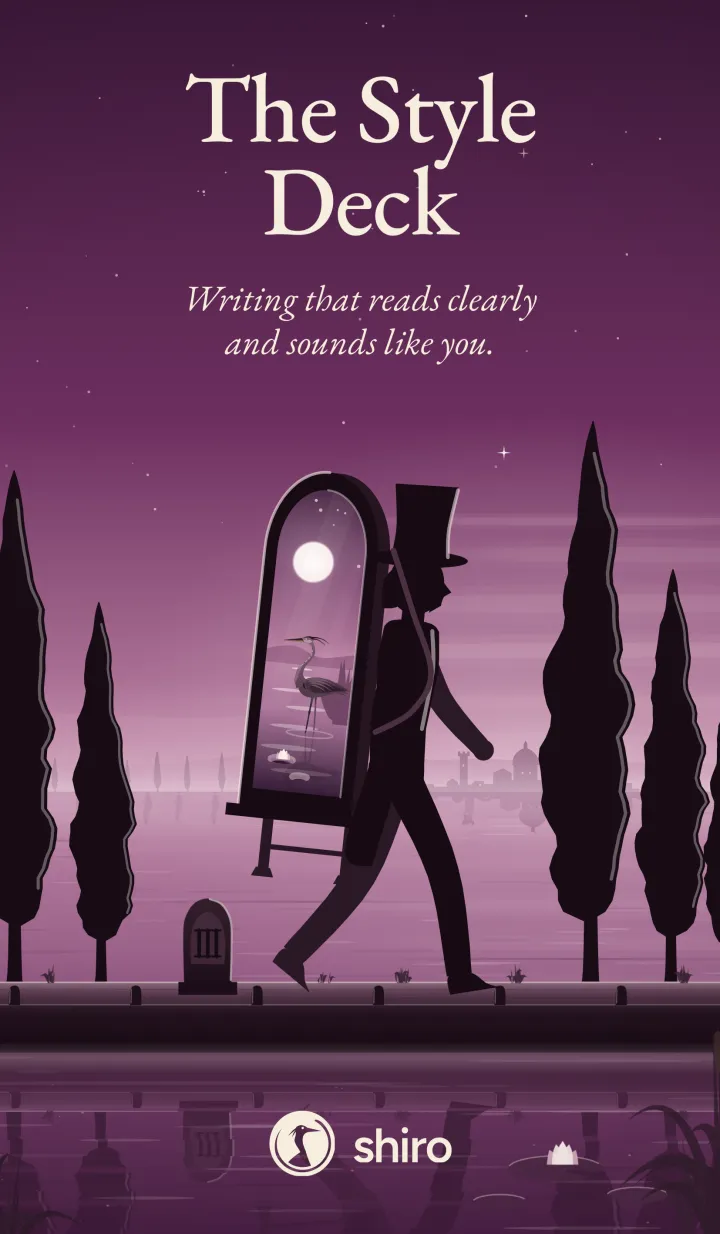
Five decks of writing craft, on cards you can hold. Each is kept by a classic writer, played its own way and painted in one light, from Dumas’s day on the coast to Flaubert’s evening in the garden.
No AI and no prompts. Made by writers, for writers.
The starter deck · Free in Shiro
Start with the Practice Deck
A book that gets written.
Twenty-five cards on what no craft book covers: starting, an ordinary day, not settling, being stuck, coming back. Before you write, take one from the pile that fits how you feel. It is free in Shiro, once you finish the welcome checklist.
Five Ways to Play
A deck of techniques is easy to buy and hard to use. So each deck comes with its own way of being played, the one its subject needs.
- the lineThe Story DeckChoose a chart, then lay the six anchors in a line, from the world before to the world after. Fill the hours between them with turns, reversals and set pieces. Test every join with a knot. Where only “and then” fits, move a card or cut it. Then write the line down, as a logbook does.
- the interviewThe Character DeckChoose a cast for the book, then a character, and deal five interview cards. Answer each one in writing, in the character’s own voice. Where an answer dodges, lay a follow-up across it. Stop when you can guess their answer before you write it. In Shiro, the pages go in their World entry.
- the pathThe Knowledge DeckChoose a plan, then lay the six cairns in a path, from the valley to the summit. Fill the steps between them with techniques, examples and sparks. Lay a why on any step to test it. If the page can’t answer, go back to its cairn. Then write the path down, as an ascent does.
- flaw and fixThe Style DeckSpread the flaw cards beside a page of your draft. When you find a flaw on the page, take its fix. Apply it across the chapter, then put the pair back in the box.
- the diagnosisThe Revision DeckName what’s wrong with the draft, or read it for a week with the Distance cards until you can. Take the prescription card for that problem. It names three or four cards, in order. Do one pass per card, then note it on the margin line. Next problem.
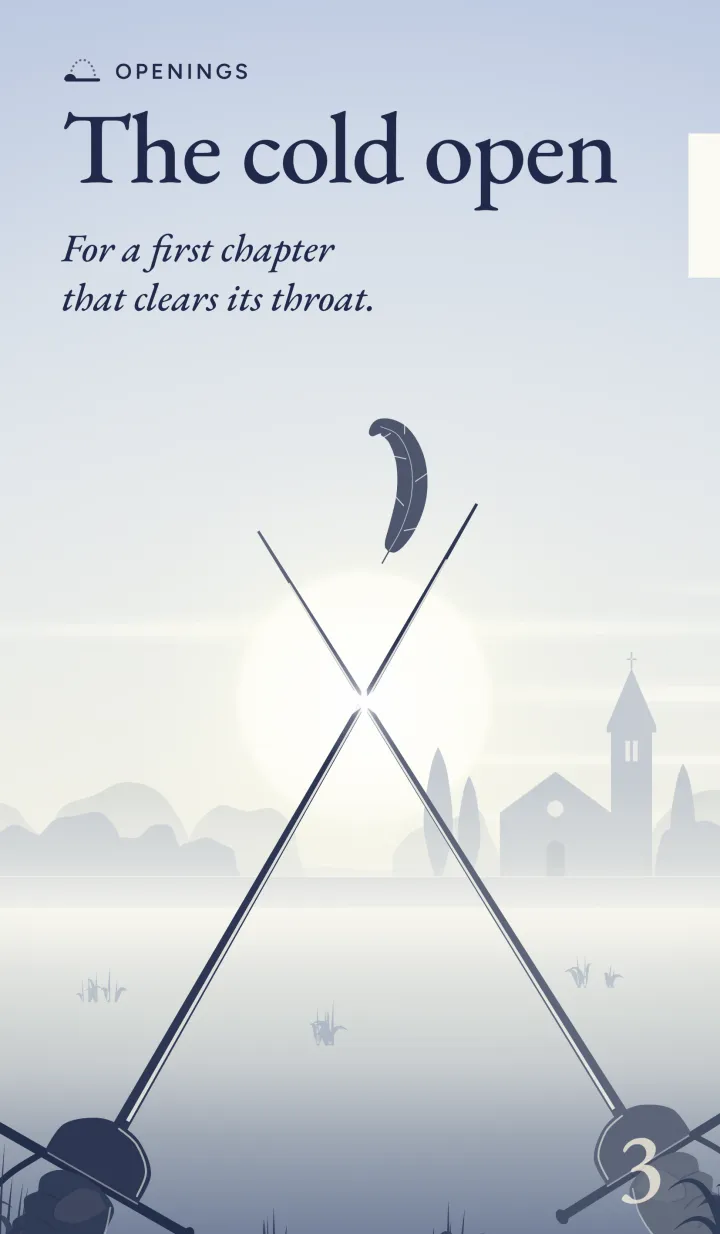
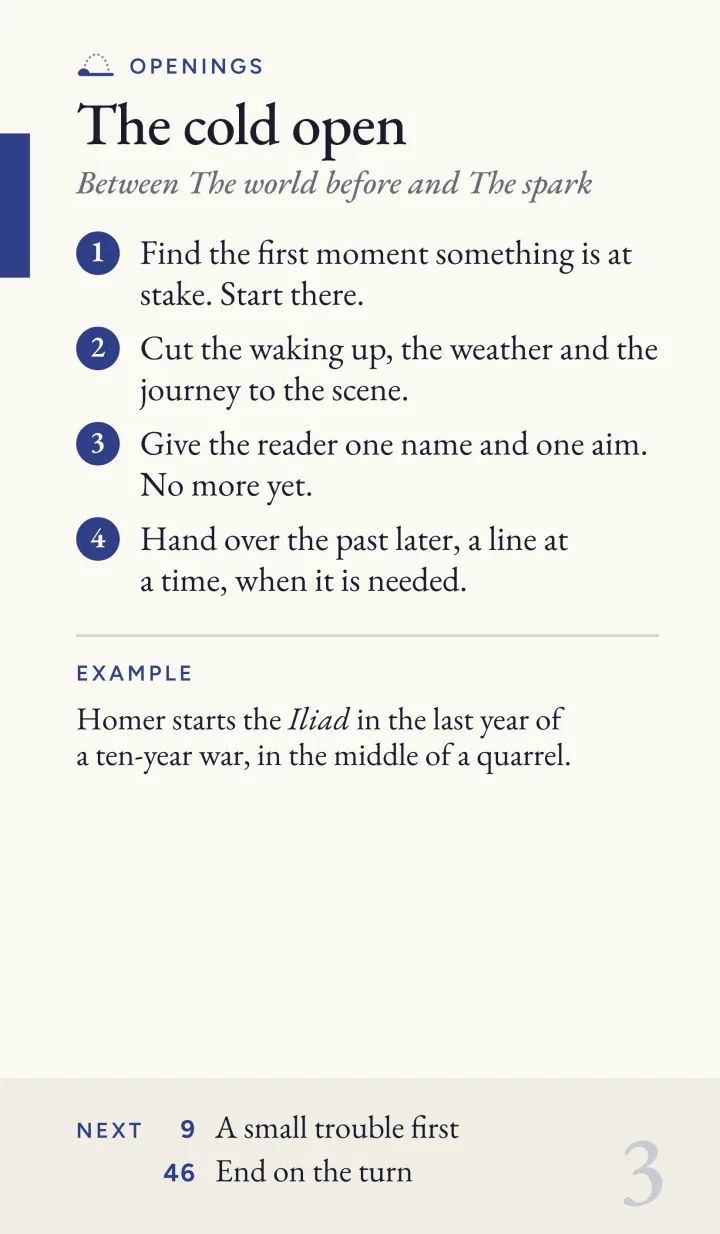
What Every Card Carries
- One idea
- Its name on the front, the problem it solves under it, the work on the back.
- An example
- Homer on one card, The Martian on another.
- Next
- The cards to try before or after it.
Why a Deck of Cards
A craft book is read once and shelved. A card sits beside the keyboard, says one thing and asks you to do it now, to this chapter.
Cards also move. You can lay a plot out on the table, deal an interview, spread the flaws beside a page or hand a friend the one about filter words. A book can’t, and a screen shows one thing at a time.
The Questions People Ask
When can I get one?
Soon. The Story Deck comes first, then the Character, Knowledge, Style and Revision decks. Press “Tell me when it’s out” on a deck’s page and we’ll write to you once, when it can be ordered. The Practice Deck is out already: it is free in Shiro.
Do I need Shiro to use them?
No. They are paper cards, and they work beside any page, in any app or none. If you write in Shiro, a few meet the app: the Story Deck’s line goes on the Board, and the Character Deck’s interviews go in World.
Is there AI in them?
No. No prompts and no chatbot: every card is written by writers, for writers.
What language are they in?
English or French, one edition each. The French edition is written for French readers, not translated.
What is the course?
Forty-five minutes of video that come with the deck: how the patron worked, then one short lesson for each category, with a technique shown in a classic, in a story of today and on a draft. Then a 30-day plan, one card a day.
Can I get all five?
Yes, once all five exist: the set of five will be $179.