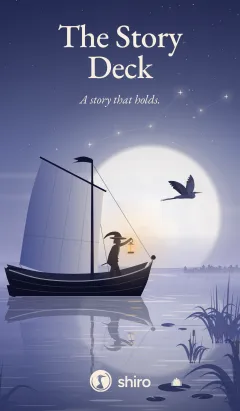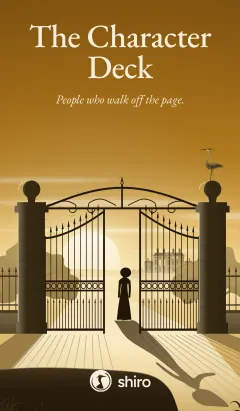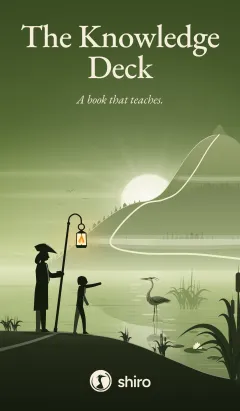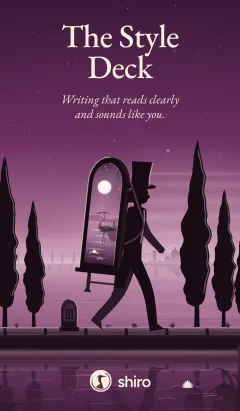
Shiro Decks
The Revision Deck
From a first draft to a second.
You finished the draft. Now it needs a second one, and “make it better” is not a plan. The Revision Deck makes it one: name what is wrong, take the card for that problem, and do one pass at a time.
- From the whole book down to one word, in six steps
- A prescription for each common problem: which cards, in what order
- Each technique in a classic and in a story of today
You Have Read Chapter One Forty Times
Revision is where drafts go to wait. You open the file, fix three commas in chapter one, move a scene, move it back and close the file. The book is no better, and you know it too well by now to see why.
Writers who revise well don’t reread harder. They name one problem, go through the whole book for that problem only, then name the next. That is the method, and this deck is how you keep to it.
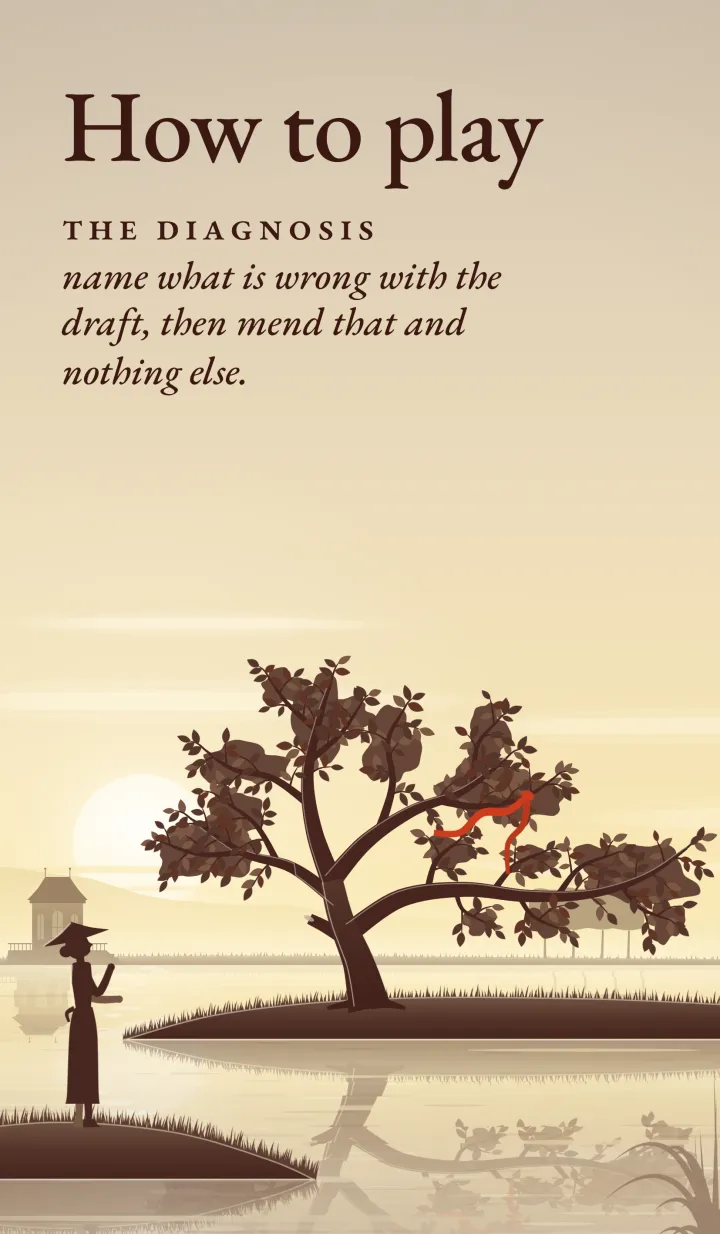
Played by the diagnosis
How It’s Played
- Name what’s wrong with the draft, or read it for a week with the Distance cards until you can.
- Take the prescription card for that problem. It names three or four cards, in order.
- Do one pass per card, then note it on the margin line. Next problem.
Six Categories, One Line
Six steps closer to the page, from across the river to one leaf. Start far away: the line edits come last, once the chapters they sit in are staying.
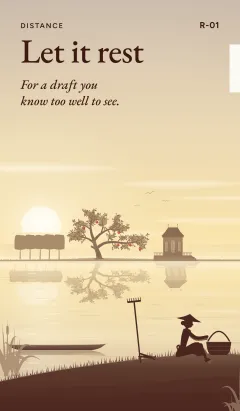 1DistanceGet far enough from the draft to read it as a stranger.
 2StructureWhere the book truly starts, where it sags, where it ends.
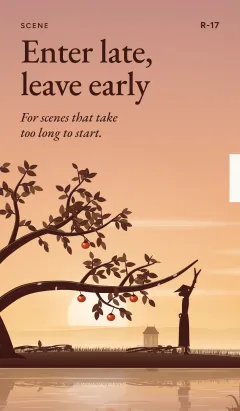 3SceneOne scene at a time: when it starts, what turns, where it stops.
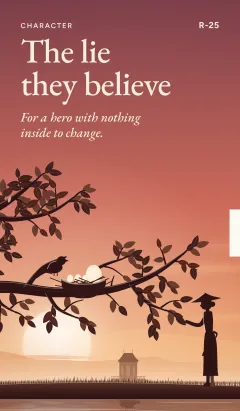 4CharacterWhat your people want, the lie they believe, and the change.
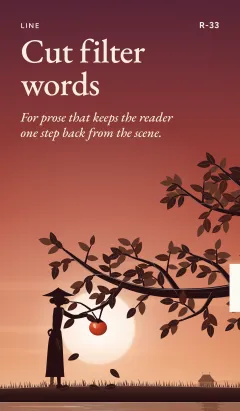 5LineFilter words, echoes, the sentence that says it twice.
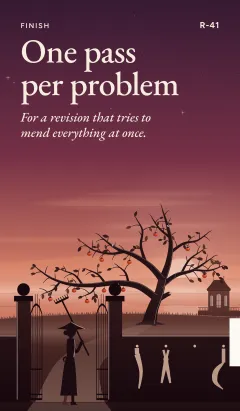 6FinishThe last passes, and knowing when to close the gate.
One Card, Both Sides
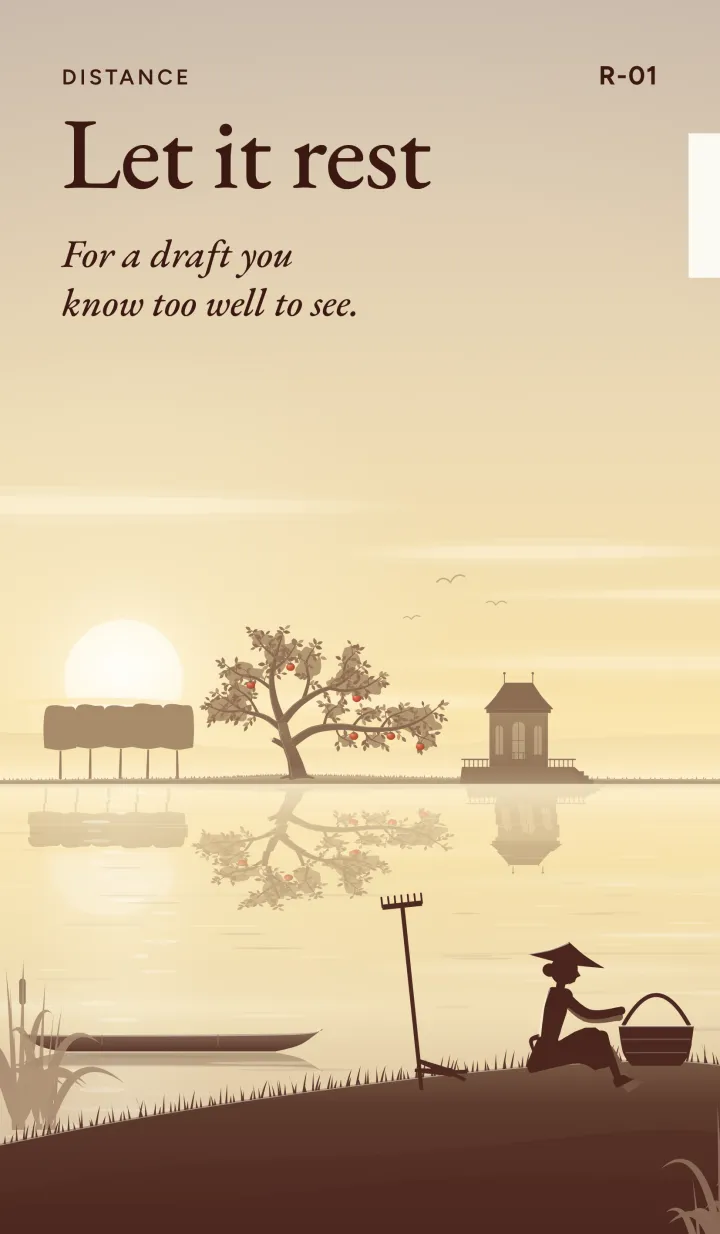
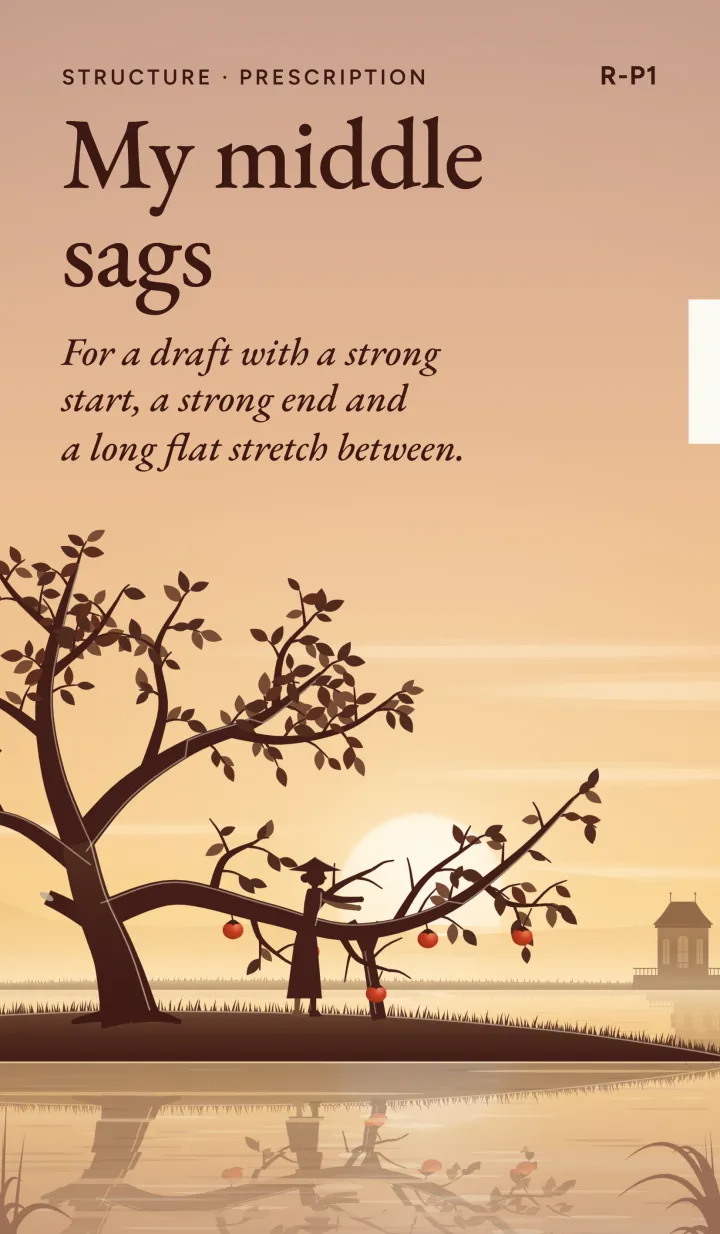
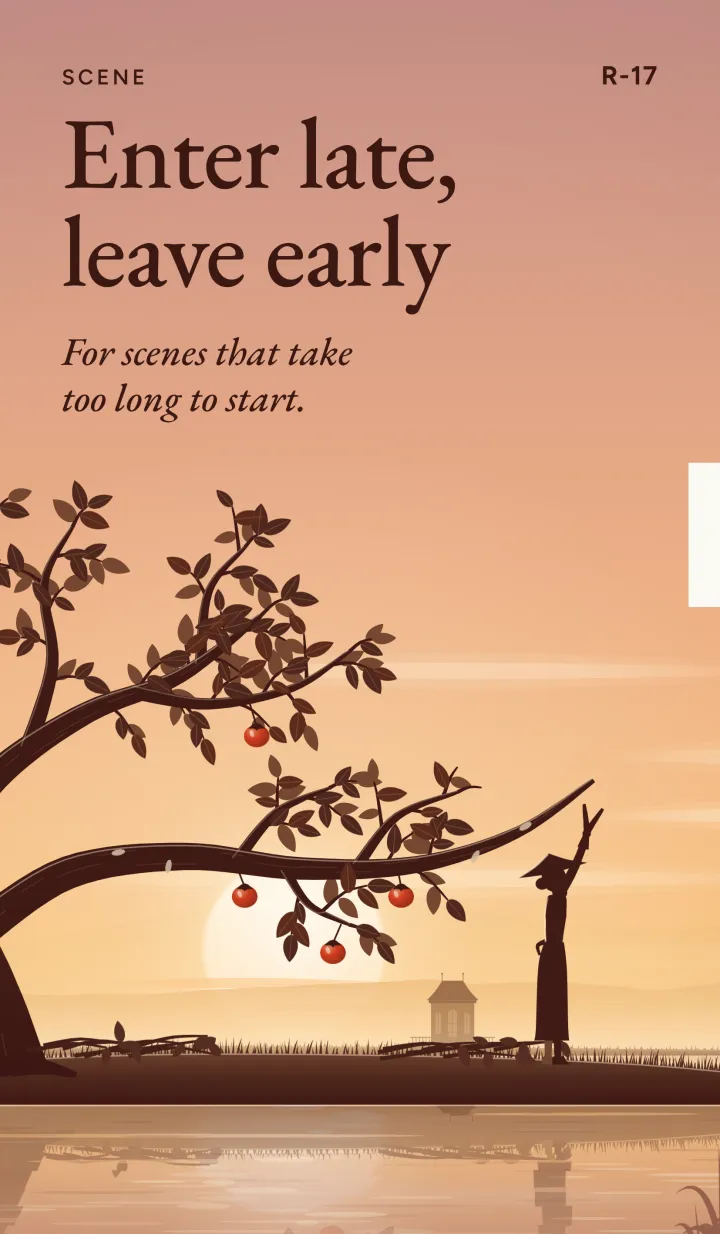
The front names the card and the problem it solves, in the deck’s light. The back is the working side, the one you keep open beside the draft.
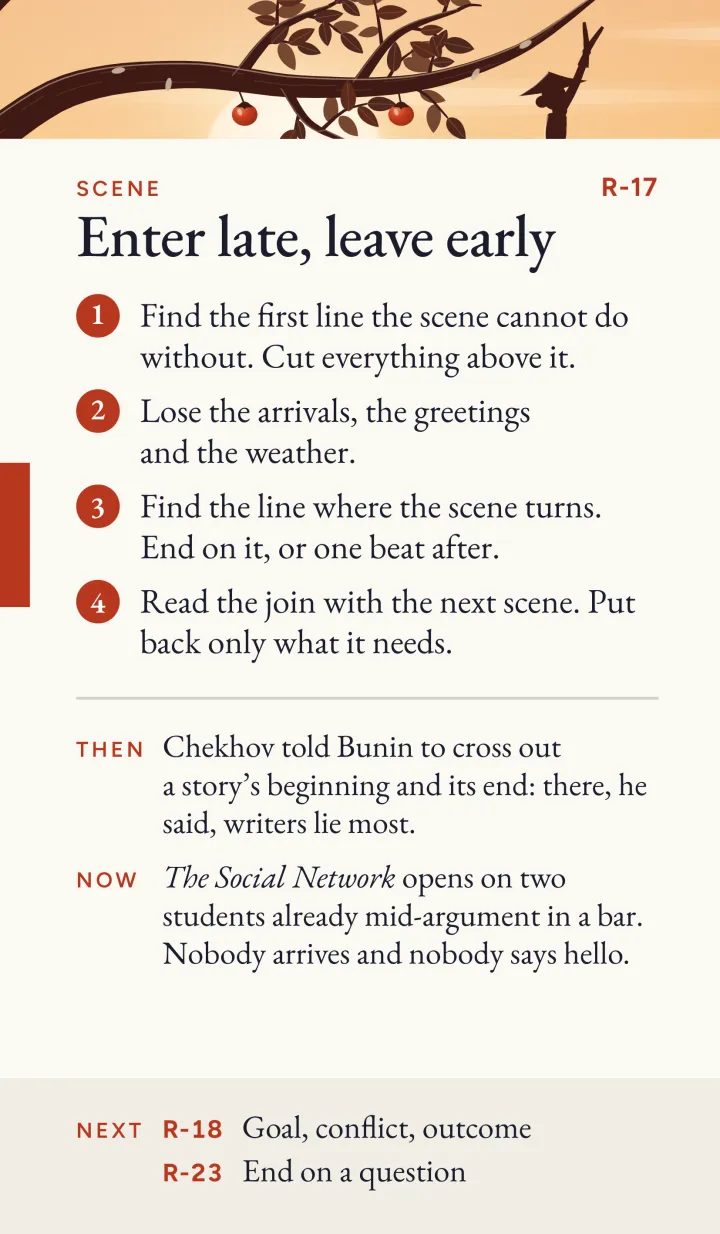
- The work
- Steps, questions or lines to fill in: short enough to follow with the draft open.
- An example
- The idea at work in a classic, or in a book, film or series of today.
- Next
- The cards to try before or after, so no card is a dead end.
Enter late, leave early, from Scene.
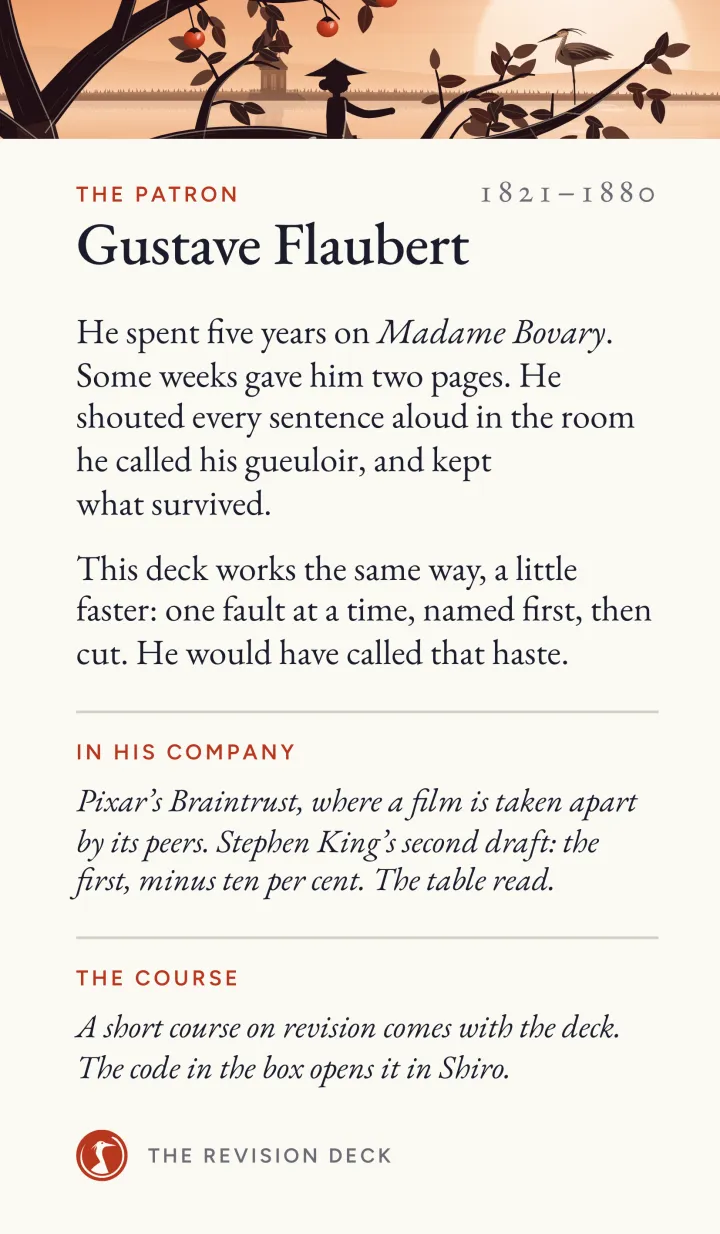
1821–1880
Kept by Flaubert
Flaubert spent five years on Madame Bovary, at two pages in a good week. Every sentence was shouted aloud in his gueuloir, and only the ones that survived it stayed.
He gives the deck its voice: exacting, and wry about perfectionism. He has a card of his own, on top of the deck.
The courseSix Evenings with Flaubert45 minutes
What’s in the Box
- 54 cards: 48 techniques and 6 prescriptions
- The patron’s card and the how-to-play card, on top of the 54
- Tarot size, 70 × 120 mm, on heavy matte stock
- A box painted with the deck’s hero, and the heron somewhere in the scene
- The course, Six Evenings with Flaubert: 45 minutes of video and a 30-day plan
Why a Deck of Cards
A craft book is read once and shelved. A card sits beside the keyboard, says one thing and asks you to do it now, to this chapter.
Cards also move. You can lay a plot out on the table, deal an interview, spread the flaws beside a page or hand a friend the one about filter words. A book can’t, and a screen shows one thing at a time.
The Questions People Ask
My first draft isn’t finished. Is it too soon?
For most of the deck, yes: revision works on a whole draft. The Distance cards are the exception. They are about getting far enough away to read it, and that starts the day you type the last line.
When can I get one?
Soon. The Story Deck comes first, then the Character, Knowledge, Style and Revision decks. Press “Tell me when it’s out” on a deck’s page and we’ll write to you once, when it can be ordered. The Practice Deck is out already: it is free in Shiro.
Do I need Shiro to use them?
No. They are paper cards, and they work beside any page, in any app or none. If you write in Shiro, a few meet the app: the Story Deck’s line goes on the Board, and the Character Deck’s interviews go in World.
Is there AI in them?
No. No prompts and no chatbot: every card is written by writers, for writers.
What language are they in?
English or French, one edition each. The French edition is written for French readers, not translated.
What is the course?
Forty-five minutes of video that come with the deck: how the patron worked, then one short lesson for each category, with a technique shown in a classic, in a story of today and on a draft. Then a 30-day plan, one card a day.
Can I get all five?
Yes, once all five exist: the set of five will be $179.