Shiro Decks
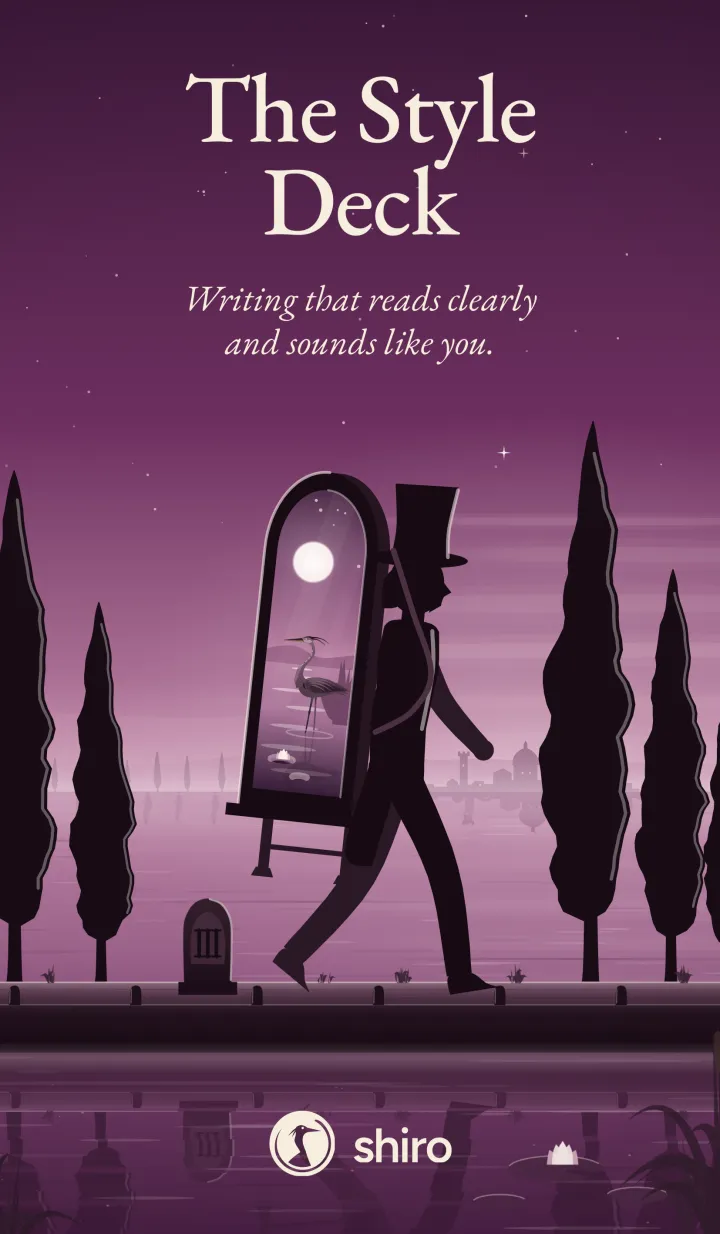
The Style Deck
Writing that reads clearly and sounds like you.
Every flaw card names a fault you can find on the page, and its pair is the fix. Spread the flaws beside your draft; when you spot one, take its fix and apply it across the chapter.
- 21 flaw and fix pairs, from filter words to dialogue that echoes
- 6 master and you pairs: a passage annotated, then your turn
- A before and after on every fix
$49plus shipping
Coming soon
Tell me when it’s out54 · 21 flaw and fix pairs and 6 master and you pairs
Every Sentence Is Fine. The Page Isn’t.
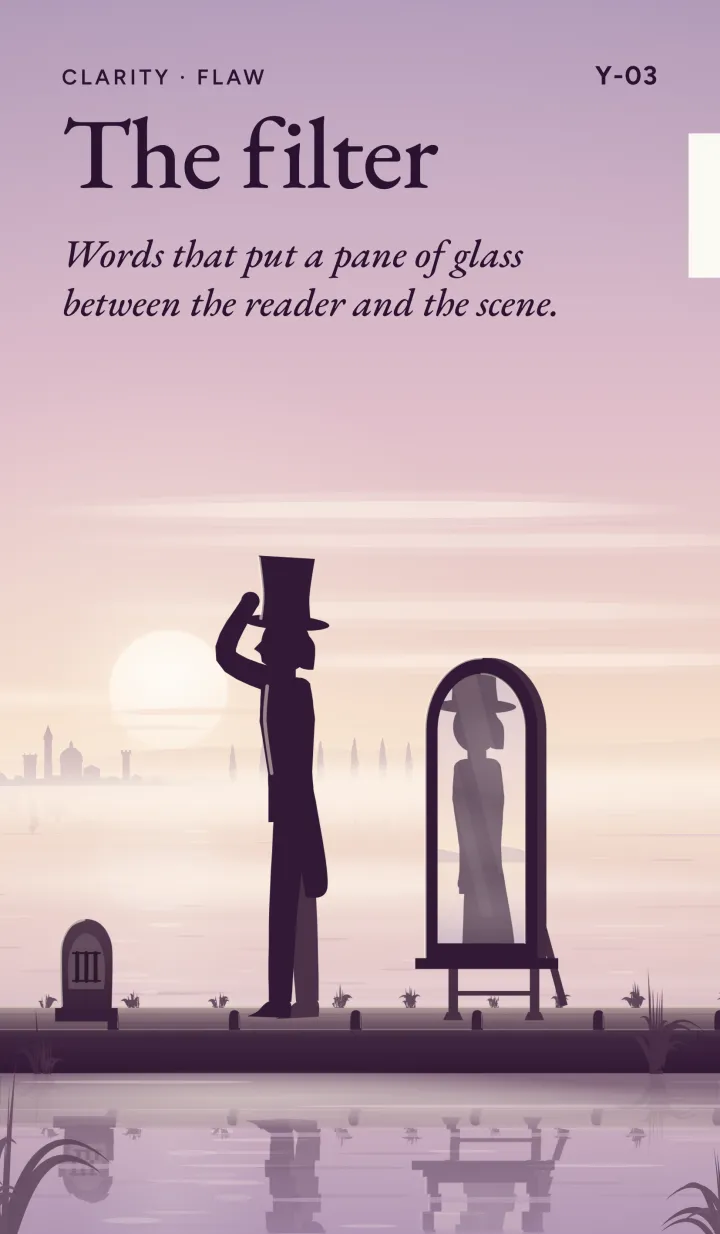
You can’t point at the mistake, because there isn’t one. Each sentence is correct and the words are well chosen, and the page still reads like wading. Style faults hide that way: one filter word is nothing, forty a chapter are a pane of glass between the reader and the scene.
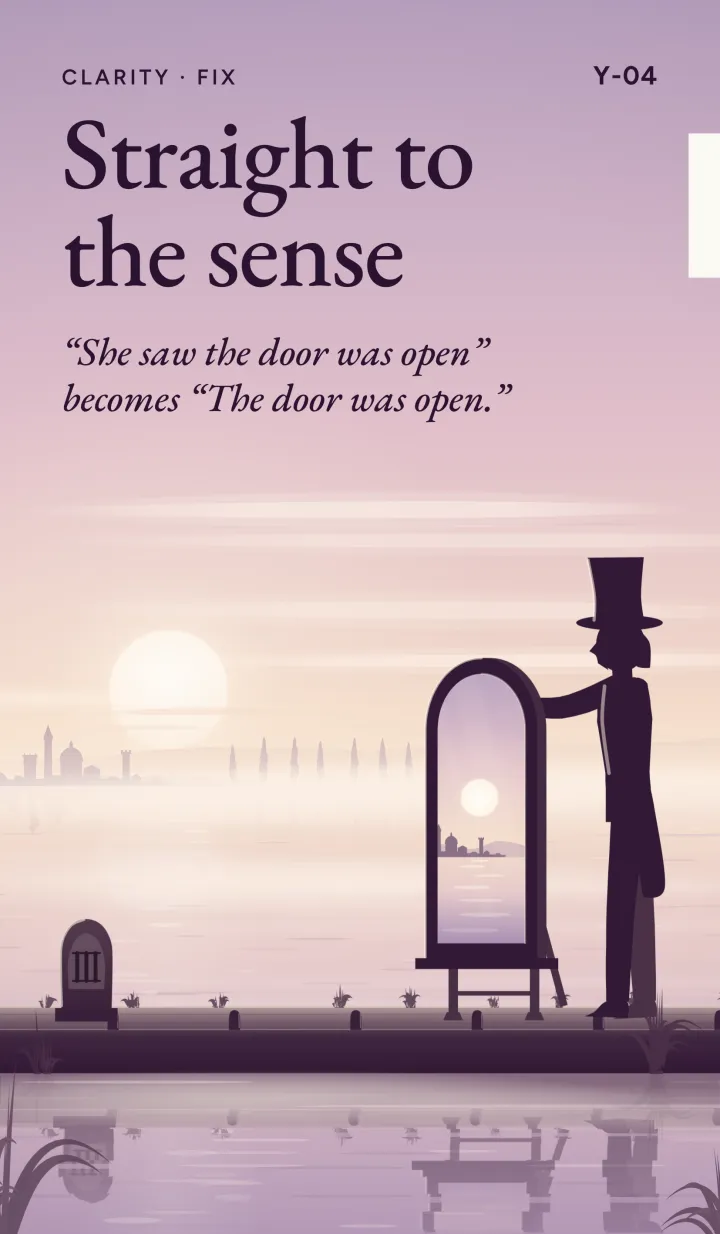
This deck names the faults one at a time, so you can see them, and gives each its cure. “She saw the door was open” becomes “The door was open.”
Played by flaw and fix
How It’s Played
- Spread the flaw cards beside a page of your draft.
- When you find a flaw on the page, take its fix.
- Apply it across the chapter, then put the pair back in the box.
Six Categories, One Line
Six stretches of one road as the evening goes, from the fog of sunset to the first star. On each flaw, the mirror on the carrier’s back shows the thing wrong; on its fix, it shows it true.
 1ClarityThe words that stand between the reader and the scene.
 2PrecisionThe vague word, and the exact one.
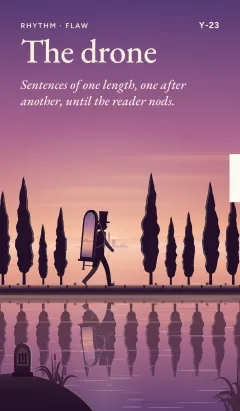 3RhythmSentences of one length, and how to vary the step.
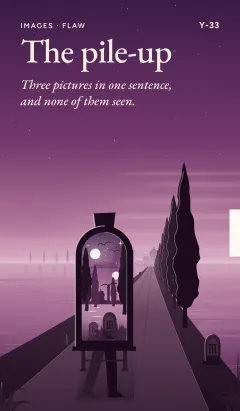 4ImagesOne picture a sentence, and really seen.
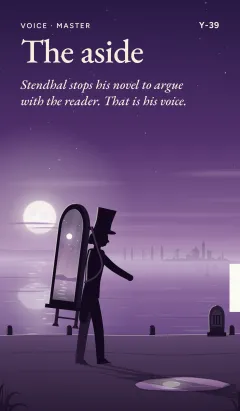 5VoiceAsides, opinions, the sound of you.
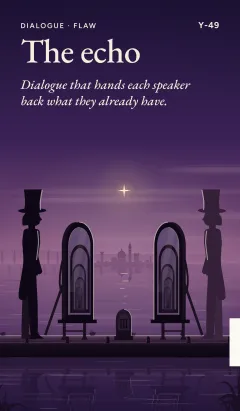 6DialogueTalk that answers sideways, the way people do.
One Card, Both Sides
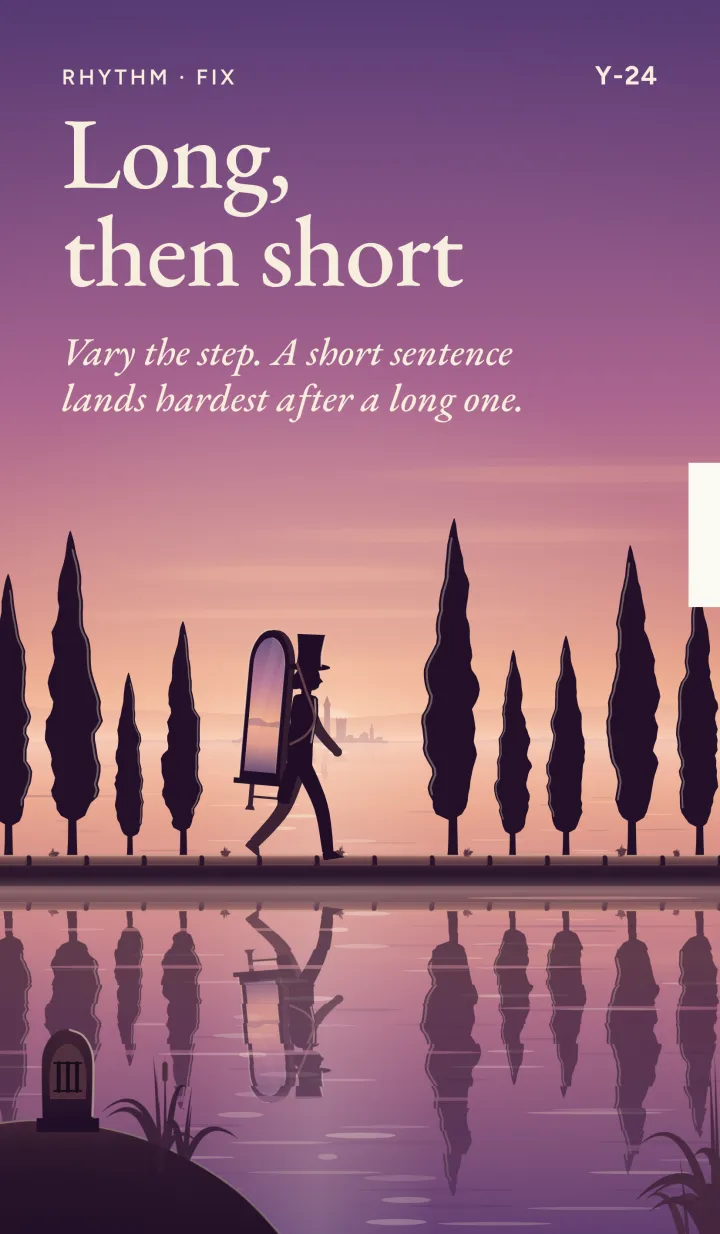
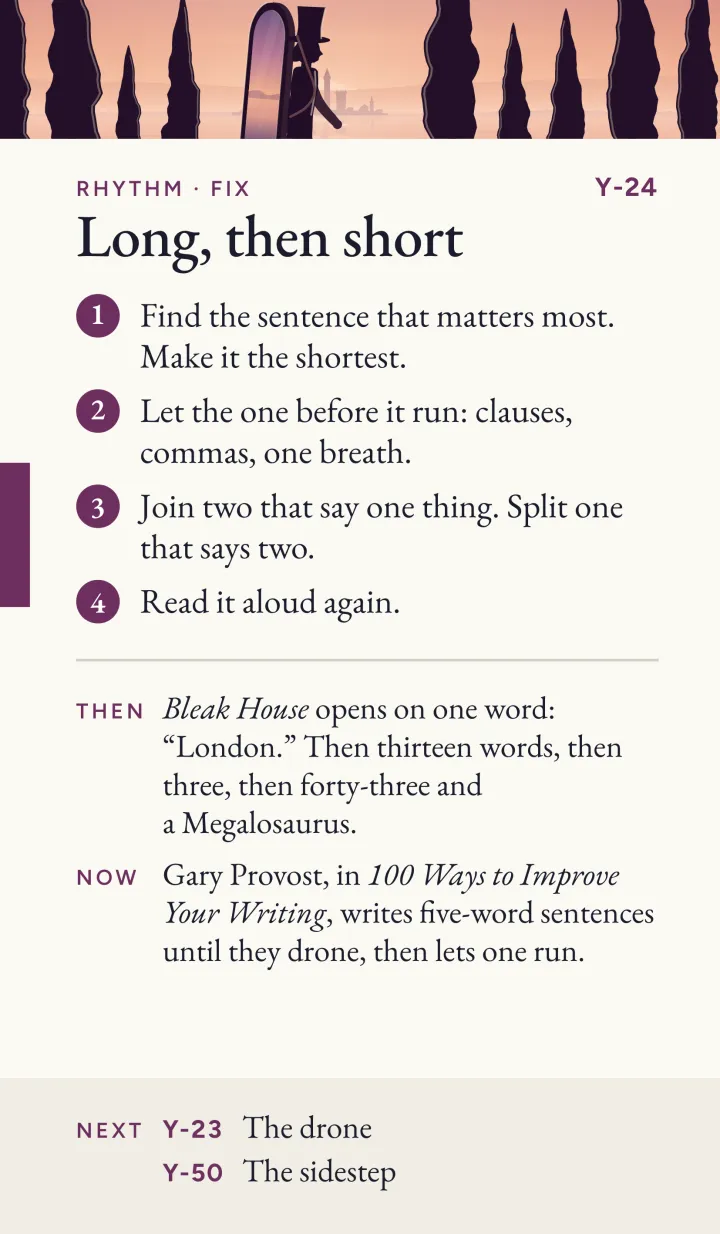
The front names the card and the problem it solves, in the deck’s light. The back is the working side, the one you keep open beside the draft.
- The work
- Steps, questions or lines to fill in: short enough to follow with the draft open.
- An example
- The idea at work in a classic, or in a book, film or series of today.
- Next
- The cards to try before or after, so no card is a dead end.
Long, then short, a fix from Rhythm.
1783–1842
Kept by Stendhal
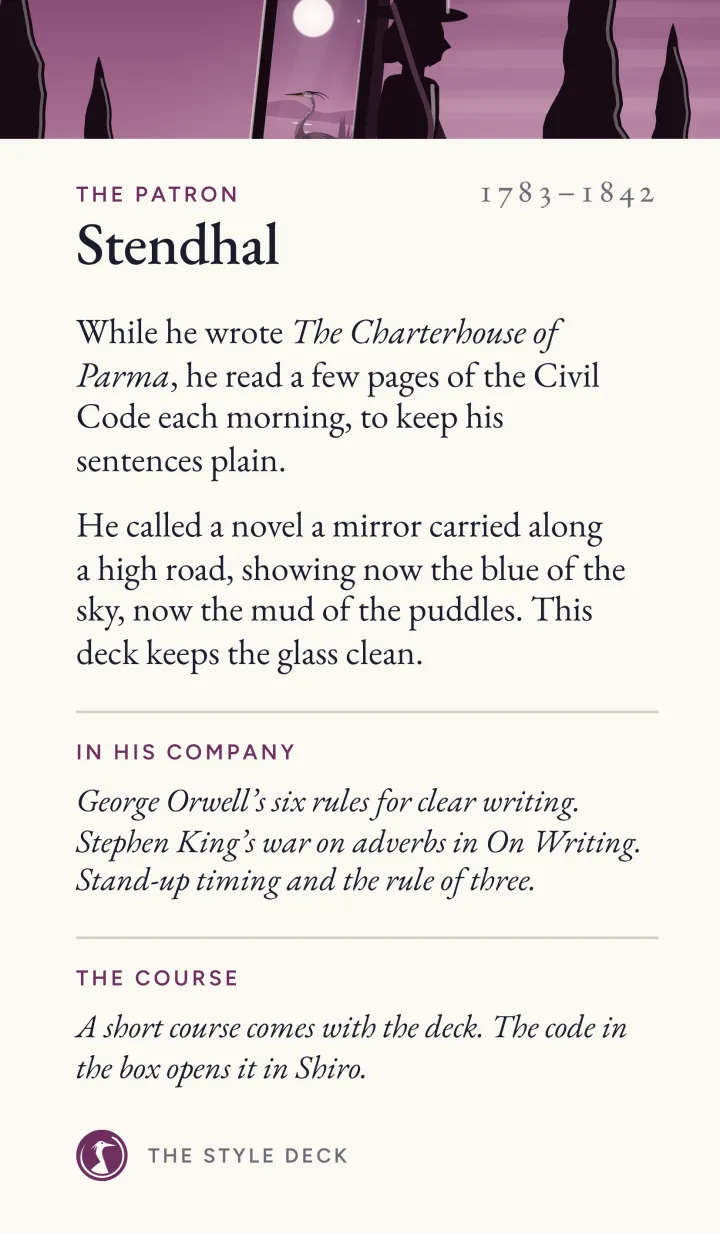
While he wrote The Charterhouse of Parma, Stendhal read the French Civil Code each morning to keep his sentences plain. A novel, he wrote, is a mirror carried along a high road, and the deck took its picture from him.
He gives it its voice too: dry, precise, allergic to ornament. He has a card of his own, on top of the deck.
The coursePlain and Alive, with Stendhal45 minutes
What’s in the Box
- 54 cards: 21 flaw and fix pairs and 6 master and you pairs
- The patron’s card and the how-to-play card, on top of the 54
- Tarot size, 70 × 120 mm, on heavy matte stock
- A box painted with the deck’s hero, and the heron somewhere in the scene
- The course, Plain and Alive, with Stendhal: 45 minutes of video and a 30-day plan
Why a Deck of Cards
A craft book is read once and shelved. A card sits beside the keyboard, says one thing and asks you to do it now, to this chapter.
Cards also move. You can lay a plot out on the table, deal an interview, spread the flaws beside a page or hand a friend the one about filter words. A book can’t, and a screen shows one thing at a time.
The Questions People Ask
Won’t it make everyone sound the same?
The opposite. The flaws are the habits that make prose sound like everyone’s: filters, vague words, one rhythm. The Voice cards are about what is left when those are gone.
When can I get one?
Soon. The Story Deck comes first, then the Character, Knowledge, Style and Revision decks. Press “Tell me when it’s out” on a deck’s page and we’ll write to you once, when it can be ordered. The Practice Deck is out already: it is free in Shiro.
Do I need Shiro to use them?
No. They are paper cards, and they work beside any page, in any app or none. If you write in Shiro, a few meet the app: the Story Deck’s line goes on the Board, and the Character Deck’s interviews go in World.
Is there AI in them?
No. No prompts and no chatbot: every card is written by writers, for writers.
What language are they in?
English or French, one edition each. The French edition is written for French readers, not translated.
What is the course?
Forty-five minutes of video that come with the deck: how the patron worked, then one short lesson for each category, with a technique shown in a classic, in a story of today and on a draft. Then a 30-day plan, one card a day.
Can I get all five?
Yes, once all five exist: the set of five will be $179.